How to Build an IoT App in 2026: What to Build, What It Costs, and What Actually Makes It Work?
- Sansen Baker

- Apr 27
- 10 min read

The biggest mistake people make with IoT apps is assuming they are just normal mobile apps attached to hardware.
They are not.
A real IoT product sits at the point where software, hardware, cloud infrastructure, user behavior, and trust all meet. That is why some connected products feel seamless while others feel frustrating even when the interface looks polished. The difference is rarely just design. It is usually architecture, reliability, onboarding, alert logic, and whether the product solves a real operational problem.
And that matters even more in 2026 because IoT is maturing fast. IoT Analytics says the enterprise IoT market reached $324 billion in 2025, up 13% year over year, and projects 14% growth in 2026. It also says connected IoT devices reached 21.1 billion by the end of 2025, with enterprise use driving a major share of that growth.
That means the opportunity is real. But so is the complexity.
If you are searching for an IOT App Development Company, comparing IOT App Development Services, or planning custom IoT app development, you are probably trying to answer one or more of these questions:
What should an IoT app actually include?
How much should I budget?
Should I build for consumers, enterprises, or operations teams?
What business model makes sense?
How do I avoid building something that looks good in a demo but fails in production?
This article is designed to answer those questions clearly, with practical guidance, current market context, and a product-first lens.
First, what is an IoT app really?
An IoT app is not just a front-end control panel.
It is the user-facing layer of a larger connected system that typically includes:
Sensors or hardware devices
Firmware
Connectivity protocols
Cloud/backend systems
APIs
User authentication
Mobile or web applications
Analytics and alerting infrastructure
Admin or operations dashboards
The app itself helps users do one or more of these things:
Connect devices
Monitor live status
Send commands
Receive alerts
View historical data
Automate actions
Manage users, permissions, or locations
Question: What does an IoT app do?
An IoT app helps users connect to, monitor, control, and analyze smart devices or connected systems through mobile or web software.
Why this Matters?
A lot of businesses start with the wrong mental model. They think they are building “an app,” when in reality they are building a connected product ecosystem. That is exactly why choosing the right IOT App Development Company matters: the job is not only UI development. It is system design.
Why IoT app development is becoming more important in 2026
The conversation around IoT has changed.
A few years ago, many teams were still experimenting. In 2026, more companies are trying to operationalize connected products at scale. IoT Analytics describes the market as moving deeper into an AI-driven and autonomous phase, where connected systems are increasingly tied to business outcomes rather than just passive visibility.
MarketsandMarkets also projects the broader global IoT market to grow from $547.06 billion in 2025 to $865.20 billion by 2030, while the IoT platform market is expected to reach $67.47 billion in 2026 and continue rising through 2031.
That growth is showing up in practical use cases:
Smart homes
Industrial equipment monitoring
Asset and fleet tracking
Connected healthcare devices
Energy optimization
Logistics automation
Building management
Environmental monitoring
Expert signal
NIST’s IoT cybersecurity program has repeatedly emphasized that trust is central to adoption. In 2026, NIST described its mission as helping “cultivate trust in IoT,” and in earlier guidance it made clear that trust depends on more than cybersecurity alone, including reliability, maintainability, and broader ecosystem design.
Why this matters?
The value of an IoT app in 2026 is no longer just “remote access.” The real value is:
Faster decision-making
Better operational visibility
Lower downtime
Smoother automation
More predictable user experiences
What Users Actually Want From an IoT App?
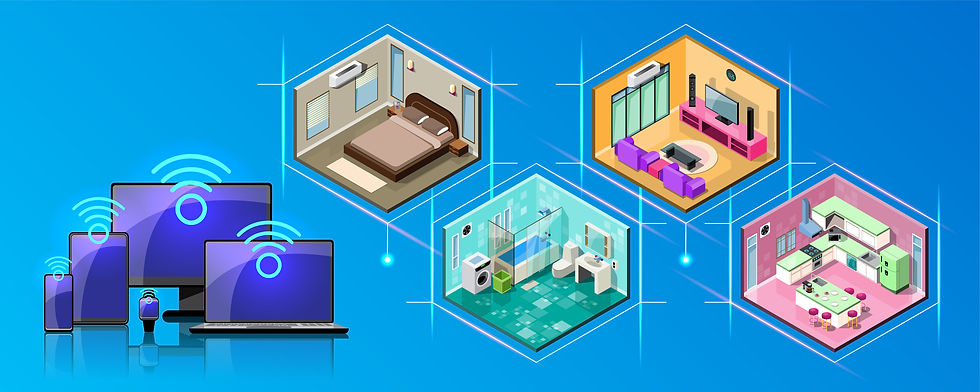
Most IoT app articles focus on technology. Users do not.
Users care about whether the app makes connected systems easier to understand and easier to trust.
Whether the end user is a homeowner, a warehouse manager, a hospital admin, or an industrial team, their expectations are usually similar:
1. Setup that does not feel technical
Pairing and onboarding need to be simple. If the first ten minutes are confusing, retention drops immediately.
2. Live, useful visibility
Users want to know what is happening now, not what happened long enough ago that the data is no longer actionable.
3. Control without uncertainty
If the user taps a command, the system should confirm what happened clearly.
4. Alerts that are meaningful
Too many IoT apps confuse noise with intelligence. Good alerts feel timely and relevant.
5. Confidence in security and access
Users may not understand protocol layers, but they do understand whether a product feels safe and trustworthy.
6. Clean reporting and history
Historical data matters because it helps users spot patterns, justify decisions, or diagnose issues.
Why this matters?
This is where many connected apps lose users. The product team falls in love with the device, but the user just wants clarity, speed, and control.
The four most common types of IoT apps
Before you think about features or pricing, decide which kind of IoT product you are building.
Comparison table: common IoT app categories
Type of IoT app | Main user | Core value | Example use case |
Consumer control app | End user | Easy control and monitoring | Smart home, wearable, appliance |
Operational monitoring app | Teams and operators | Real-time visibility | Fleet, energy, field services |
Industrial IoT app | Enterprise / plant teams | Machine health and uptime | Manufacturing, maintenance |
Data and analytics app | Decision-makers | Trend analysis and forecasting | Asset performance, compliance |
Each category changes what “good” looks like.
A consumer app needs frictionless setup and elegant controls.
An industrial app needs reliability, permissions, and alert confidence.
An analytics-heavy app needs reporting depth and clean data presentation.
Why this Matters?
If you skip this step, you risk designing the wrong product experience. A smart-home
app and an industrial monitoring app should not feel like the same product.
Step-by-step: how to build an IoT app that actually works
Step 1: Start with the real-world problem, not the technology
Do not begin with “we want an IoT app.”
Start with:
What operational problem exists?
Who experiences it?
What device or system data matters?
What actions users need to take?
The best connected apps are built around a measurable workflow problem.
Step 2: Define the system architecture early
In IoT, architecture is not a background decision. It is the product.
You need to decide:
What data is processed locally vs in the cloud?
How devices authenticate?
How often does data sync?
What happens when connectivity drops?
Who can access what?
How actions are logged and confirmed?
This is where custom IoT app development becomes important. Generic approaches often fail because device logic and data behavior are too specific.
Step 3: Build the smallest useful MVP
A real IoT MVP is not a stripped-down pitch deck app. It is the smallest version that proves value.
That usually means:
Onboarding and pairing
One or two critical dashboards
The main control or monitoring action
Notifications
Secure login
Backend sync
Basic admin view
Step 4: Test the device-to-user loop relentlessly
A successful IoT app must answer:
Did the device connect?
Did the system receive the signal?
Did the action execute?
Did the user see the correct result?
Did the history update correctly?
If any part of that chain breaks, trust erodes fast.
Step 5: Launch with analytics from day one
Watch:
Onboarding completion
Failed device pairing rate
Command success rate
App session frequency
Alert open rate
Churn after first week
Support issue categories
Step 6: Improve based on usage, not assumptions
The best version of your app is usually not the first one. It is the first one plus what you learned from how people actually used it.
Why this Matters?
In connected products, launch is not the end of development. It is the beginning of reality.
For teams that want a second internal resource around planning and execution, this IoT App Development Guide works well as a contextual supporting read.
Must-have Features in a Modern IoT App
A lot of articles list every possible feature. That is not useful.
The right question is: which features are foundational across most successful IoT products?

Comparison table: must-have IoT app features
Feature | Why it matters |
Device pairing and onboarding | Without it, users never reach value |
Real-time monitoring | Core to visibility and trust |
Remote control or command actions | Turns data into action |
Push alerts and notifications | Keeps users informed |
Authentication and role-based access | Essential for security |
Device status history | Helps diagnose and understand patterns |
Admin dashboard | Needed for support and management |
Cloud sync | Supports reliability and continuity |
Analytics and reporting | Helps turn usage into insight |
1. Device onboarding and pairing
This is one of the most important parts of the product. If the app cannot connect users to devices quickly and clearly, it does not matter how strong the analytics are later.
2. Real-time dashboard
Users need a dashboard that answers, at a glance:
What is happening?
What needs attention?
What changed?
What they can do next?
3. Alerts and event logic
Good alerts reduce uncertainty. Bad alerts create fatigue.
4. Command confirmation
Users need clear feedback that an action happened, failed, or is pending.
5. Authentication and permissions
Especially in enterprise or multi-user environments, access controls are part of product quality, not just security.
6. History and reporting
Users often need both immediate visibility and historical understanding.
Why this Matters?
A successful feature set is not about volume. It is about reducing uncertainty at every critical moment.
Advanced features that make IoT apps more valuable
Once the fundamentals work, advanced capabilities can improve the product significantly.
High-impact advanced features
AI-based anomaly detection
Predictive maintenance
Edge-aware workflows
Geofencing
Automation rules
Remote diagnostics
Audit logs
Multi-site management
Advanced role permissions
White-label controls for enterprise clients
IoT Analytics’ 2026 outlook makes AI particularly relevant here, since AI-driven operations are becoming a larger part of how companies think about connected systems.
Why this Matters?
Advanced features should only be added if they create one of four outcomes:
Better reliability
Better efficiency
Lower support burden
Stronger monetization
If they do not do that, they are usually too early.
Business models for IoT apps
Not every IoT app should monetize the same way.
Comparison table: IoT app business models
Business model | Best fit | Typical revenue pattern |
Hardware + app bundle | Consumer IoT | One-time device sale + optional upsell |
Subscription SaaS | B2B / prosumer | Monthly or annual recurring revenue |
Usage-based pricing | Enterprise IoT | Devices, users, data, or event volume |
Freemium + premium app controls | Consumer IoT | Free base, paid advanced features |
Managed service model | Industrial / enterprise | Service contract + support fee |
For many B2B or operational products, subscription is often the cleanest model because the value is ongoing, not one-time.
Why this Matters?
The business model influences what you build. A subscription product needs retention and analytics. A hardware-led model may prioritize onboarding and usability more heavily.
How much does it cost to build an IoT app in 2026?
This depends on what the app does, how many platforms it supports, and how much backend/device complexity it carries.
Comparison table: estimated cost ranges
Project level | Typical scope | Estimated cost |
Basic MVP | Pairing, dashboard, notifications, auth | $25,000–$50,000 |
Mid-level app | Controls, reports, admin, cloud sync | $50,000–$100,000 |
Advanced platform | AI, automation, multi-role access, analytics depth | $100,000–$200,000+ |
Major cost drivers
Number of user roles
Number of supported devices
App + web platform scope
Backend and cloud complexity
Real-time sync requirements
Analytics/reporting depth
Admin tooling
AI or predictive features
Testing across environments
That is why teams searching for IOT App Development Services often see a large pricing spread. Two IoT apps may look similar on the surface while having very different backend and systems costs.
Question: How much does it cost to build an IoT app?
Answer: A basic IoT MVP can start around $25,000, but a custom, scalable connected platform with advanced analytics, automation, and multi-role workflows can easily exceed $100,000.
Why this matters?
The biggest budgeting mistake is underestimating backend and device logic while over-focusing on front-end screens.
Case studies: what successful IoT products get right
Case study 1: Consumer IoT products
The strongest consumer IoT apps simplify the first-use experience. They win by making device setup, control, and monitoring feel effortless.
Case study 2: Operational IoT apps
In operations-heavy categories, success comes from visibility and response. These products win when teams can react faster, prevent failures, or make better decisions.
Case study 3: Industrial IoT platforms
Industrial products usually succeed because they make complex systems manageable. They reduce downtime, improve diagnostics, and create better maintenance workflows.
What do these Case Studies have in common?
They all do one thing well: they reduce friction between the physical world and digital understanding.
Common mistakes that hurt IoT apps
Building the UI before defining the architecture
Making onboarding too technical
Over-alerting users
Ignoring role permissions
Underbuilding admin systems
Relying on unstable sync logic
Treating security like a final checklist
Shipping too many features before proving one clear use case
NIST’s repeated updates around IoT guidance show that the ecosystem keeps evolving, which means security and reliability are not static tasks. They are ongoing product responsibilities.
Why this matters?
The product can look finished and still fail in actual use if trust breaks.
FAQs
What does an IOT App Development Company do?
An IOT App Development Company helps build the software layer for connected products, including the mobile or web app, backend systems, integrations, dashboards, and device interaction logic.
What do IOT App Development Services include?
IOT App Development Services usually include product strategy, architecture planning, app development, cloud/backend engineering, analytics, security implementation, and post-launch support.
Why choose custom IoT app development?
Custom IoT app development is important because most connected products have unique device behavior, data flow requirements, and business workflows that generic app templates cannot handle properly.
What is the most important feature in an IoT app?
For many products, the most important feature is reliable device onboarding and real-time status visibility. Without that, the rest of the experience breaks down.
Is IoT app development expensive?
It can be, especially when the backend, analytics, and device logic are complex. But the real cost depends on scope, reliability requirements, and how much the app is expected to automate or monitor.
Final thoughts
The most successful IoT apps in 2026 will not be the ones with the most features.
They will be the ones that feel the most reliable.
That means:
Onboarding works
Data makes sense
Actions are confirmed
Alerts are useful
Permissions are clear
The product earns user trust
So if you are planning to build one, think beyond the interface.
Ask:
What real problem are we solving?
What must the user know immediately?
What can the system automate?
Where will trust break if we get it wrong?
That is the right starting point for both product quality and search intent.


Comments